Automated data mapping is a vital process in today’s digital world. It allows organizations to efficiently and accurately transfer data from one system to another, simplifying complex data integration tasks. In this article, we will explore the concept and functionality of automated data mapping, decode its intricacies, and discuss its benefits. Whether you are a data analyst, a business owner, or simply interested in the world of data, this comprehensive guide will provide valuable insights into automated data mapping and its significance in streamlining data processes.
Automated data mapping, a crucial part of any data integration tool, has revolutionized the way we manage and interpret personal data. Although data mapping may appear complex to the uninitiated, it’s simply the process of mapping data between two distinct data models. By leveraging AI data mapping, you can optimize program management and data governance with ease.
The data mapping software approach not only establishes how data will be transferred but also dictates how data transformations will occur – converting, enriching, or aggregating information to fit the target format or requirements. In the context of data migration, data mapping ensures that data is accurately and efficiently transferred from one system or environment to another, often involving intricate transformation steps to ensure data fidelity and usability in the new location.
Concept and Functionality of Automated Data Mapping Software
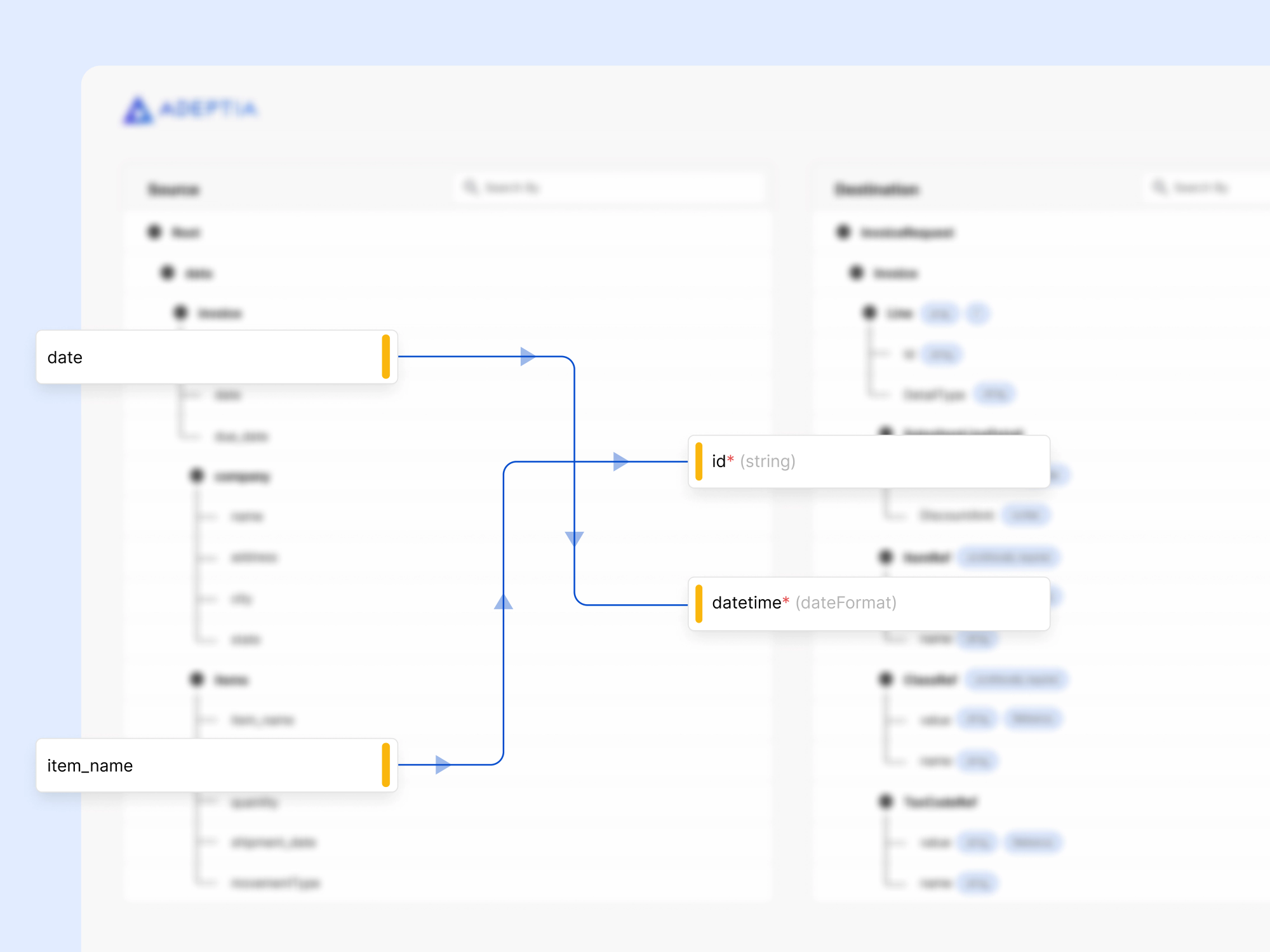
In a nutshell, automation-based data mapping methods involve taking quality data from one source and transforming it into a format that can be used or understood by another. An efficient data mapping tool can automate this process, saving considerable time and reducing errors.
This sounds simple enough, but the sophistication of automated data mapping goes deeper. Such tools bring complex processing and computational capabilities, allowing users to deal with a variety of source data and format types. Additionally, they come equipped with built connectors, which can dramatically speed up the process of connecting data sources to the target database.
Key Features of Automated Data Mapping Software:
- 1.Versatile Data Format Compatibility: Data mappings support seamless integration across diverse target data formats or data fields, including JSON, XML, CSV, and more, ensuring efficient communication between disparate systems.
- 2.Complex Data Transformations: Advanced data mapping solutions facilitate intricate transformations, such as aggregation, enrichment, and cleansing, ensuring data integrity and usability across systems.
- 3.Efficient Data Mapping: Streamlined user interfaces empower non-technical users to map data effortlessly, reducing reliance on data scientists and expediting the integration process.
- 4.Comprehensive Data Types Support: Data mapping accommodates a wide range of data types, from text and numbers to dates and geospatial data, ensuring accurate representation during transformation.
- 5.Integration with ETL Tools: Many data mapping solutions seamlessly integrate with ETL (Extract, Transform, Load) tools, enabling a smooth transition from mapping to transformation and eventual loading into target systems.
- 6.Automated Mapping Suggestions: Advanced algorithms provide automated mapping suggestions based on data patterns, accelerating the mapping process and reducing manual efforts.
- 7.Data Lineage and Documentation: Data mapping tools offer data lineage tracking and documentation features, ensuring transparency and traceability throughout the integration journey.
- 8.Reusable Mapping Templates: Users can create and reuse mapping templates for consistent transformations across multiple data integration projects, enhancing efficiency and maintaining standards.
- 9.Collaboration and Version Control: Collaboration features allow teams to work together on data mapping projects, with version control capabilities ensuring accurate tracking of changes.
Benefits of Automated Data Mapping Software
Efficiency and Speed
Integration projects often demand a high degree of manual work, which can be time-consuming. An automated data mapping tool mitigates this by significantly speeding up the data integration process. Once the mappings have been defined, the tool can process large volumes of data swiftly and securely.
Accuracy of Data
Errors during the data mapping process can wreak havoc on a project. This is where an automated tool really shines. Automated data mapping assures high data accuracy, reducing the chance of human errors such as typos, omissions, and misinterpretations.
Sustainability and Adaptability
In today’s fast-paced digital world, adaptability is key. Automated data mapping tools provides the flexibility and scalability needed to handle evolving data sources and formats. It ensures sustainability by minimizing the need for extensive software testing, manual coding, and continual supervision.
From program management to data governance, automated data mapping plays a pivotal role in delivering top performance. By choosing the right tool for your business, you can take your data integration efforts to the next level.
See Adeptia Automate in Action
See how Adeptia's Intelligent ETL platform automates data mapping end-to-end — from source and target discovery to real-time delivery — for teams in any industry.
Improving Data Mapping: Best Practices and Techniques
Data Mapping Best Practices
Following a few best practices helps teams get more value from a data mapping project. Start by profiling the source and target schemas before writing a single rule, so structural mismatches surface early. Building in data quality checks at each stage, and applying automation wherever a rule is repeatable, keeps results consistent as data volume grows.
Manual Data Mapping vs. Automated Data Mapping Tools
Doing this by hand still works for a small, one-off project, where an analyst keys in each rule manually. This rule-by-rule approach does not scale well once the number of source and target systems grows, though. Automated data mapping tools remove that bottleneck by pairing pre-built connectors with automation to handle routine transformations, freeing staff to focus on judgment calls and supporting stronger data privacy controls as information moves between systems.
Common Data Mapping Techniques
Common approaches include one-to-one field mapping for straightforward migrations, transformation-based mapping for converting units or formats, and lookup-table mapping for translating codes between systems. Many teams also rely on schema mapping when moving information into a data warehouse, since it accounts for structural differences between the two systems.
Working with Different Data Types and Systems
Every mapping rule works at the level of individual data elements — the specific fields and data structure that make up a source or target system. Consistent data management keeps those elements aligned whether the content is customer data from a CRM or unstructured data such as PDFs, emails, and scanned documents. A modern integration platform, such as Adeptia's Intelligent ETL platform, is built to normalize each of these formats before a mapping rule ever runs.
Real-Time Data Mapping: A Use Case
One practical use case is a retail order-management system that must reconcile inventory the moment a sale happens. Instead of batching updates overnight, the mapping tool listens for new transactions and maps them into a data warehouse right away, giving operations teams an accurate view of stock levels throughout the day.
Future of Data Mapping Process
Data mapping are rapidly developing with the influx of data and the need for program management. These tools are designed to provide efficiency, accuracy, and speed in organizing vast amounts of personal data, serving as a critical component in software testing.
Relevance of Personal Data
In an era where information plays a pivotal role, understanding and managing personal data has become a vital part of any organization. Data mapping tools are essential for this aspect as it aids in achieving data governance by making the data mapping process simpler and more accurate.
By utilizing data mapping tools, organizations can effectively track and control the flow of personal data, ensuring compliance with data protection regulations such as GDPR. These tools provide a comprehensive overview of how personal data is collected, stored, and used, allowing organizations to identify potential risks and take proactive measures to enhance data security.
Program Management and Software Testing
The role of data mapping tools is increasingly crucial when it comes to software testing. The tools facilitate the process of tracing and identifying potential errors, making the overall program management more effective and efficient.
Data mapping tools also help in detecting inconsistencies and ensuring data integrity during the testing phase, providing an added layer of quality control.
Data Discovery and Automated Data Mapping
Data discovery is a process that identifies patterns and trends within data, a process made more accessible due to automated data mapping. Automated data mapping tools work tirelessly to map and organize data, which is beneficial for any company that requires data-based decisions. They reduce manual labor and minimize errors, making them an invaluable asset in the data integration toolkit.
Privacy Laws and Their Implication
Given the increasing emphasis on data security, privacy laws have been enacted globally to protect personal data. Thus, implementing a data mapping tool isn’t just about increasing efficiency, but also about ensuring the organization’s compliance with these laws, thus impacting the entire data mapping process.
These privacy laws often require organizations to have a clear understanding of the personal data they collect, how it is processed, and who has access to it. A data mapping tool can help organizations achieve this level of transparency and enable them to demonstrate compliance with privacy regulations.
Data Governance in Today’s World
Data governance is an essential part of handling vast volumes of data. It involves managing, improving, and safeguarding data, processes made simpler by using reliable data mapping tools. These tools act as a watchdog, monitoring data and ensuring its utmost security, thus contributing positively to overall data governance.
With the rise of data breaches and privacy concerns, companies are under more pressure than ever to properly govern their data. Implementing robust data governance practices, supported by effective data mapping tools, not only helps organizations comply with regulations but also promotes trust and confidence among customers and stakeholders. In today’s world, data governance has become a strategic priority for businesses aiming to protect their data assets and maintain a competitive edge.
The Future
With advancements in technology, the future of data mapping tools is integration. The emergence of built connectors is already a step in the direction, allowing seamless data integration and considerably speeding up the data mapping process. The integration of machine learning and artificial intelligence in future data mapping tools can transform the entire process, making it more automated and time-efficient.
These advanced tools can not only automatically identify the relationships between different datasets but also suggest mapping rules and resolve any conflicts that may arise during the process. Additionally, with the integration of real-time data streaming and analytics, data mapping tools of the future will be able to provide instant insights and updates, enabling businesses to make more informed decisions.
Try it now with a demo!
FAQs
Make the Switch to Automated Mapping
Ready to replace manual data mapping with an automated, intelligent process? Talk to Adeptia and see your first mapping built live.